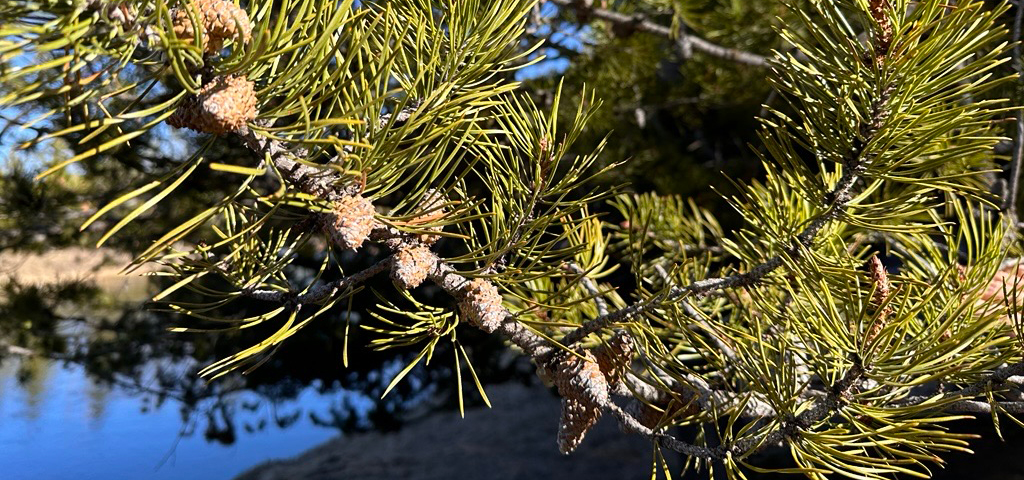
The Impact of Lodgepole Pine on Wildfire Risk and Our Ability to Mitigate It
Lodgepole pine (Pinus contorta) was introduced to Sweden in the 1960s as an alternative to the native Scots pine (Pinus sylvestris). It grows approximately 40% faster and now covers extensive areas of northern Sweden, making it economically important. At the same time, the species has raised concerns regarding reduced biodiversity, uncontrolled spread through natural regeneration, and its higher wildfire risk. Lodgepole pine stands are denser than native Scots pine forests, with greater crown biomass and larger accumulations of needle litter, increasing their flammability. More intense fire behavior has been observed in lodgepole pine forests during events such as the 2018 Fågelsjö wildfire. One potential measure to reduce fire risk is to increase the proportion of broadleaved trees, but the effects of such an approach in lodgepole pine forests remain unknown. This project therefore aims to analyze litter structure and develop fire-spread models for these forest stands.